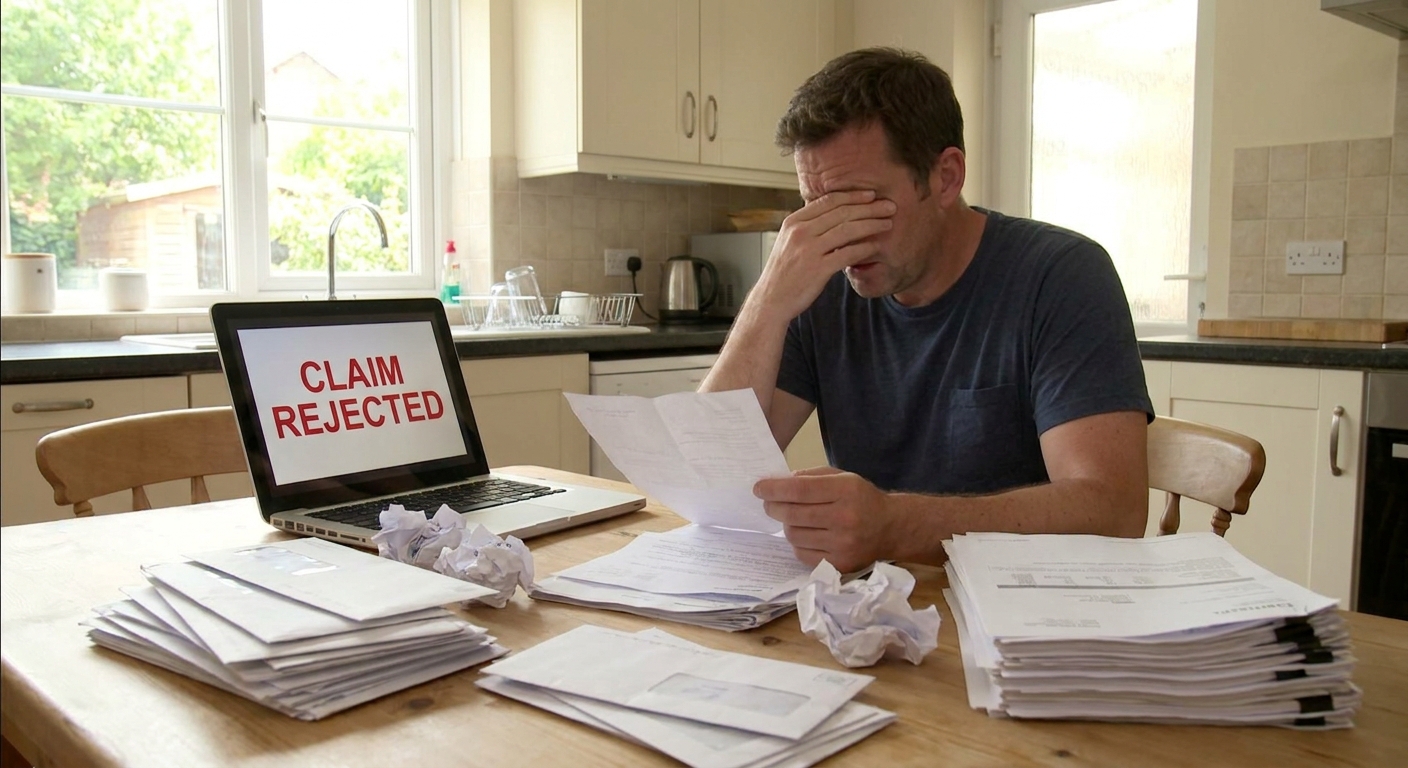
When you’re dealing with an insurance claim or legal dispute, the other side—whether an insurance company or a business—often has experience, lawyers, and established processes. Ordinary consumers usually do not. That imbalance makes it easy to make innocent mistakes that quietly weaken your case.
Why Small Missteps Can Cost You Big Money
This article highlights common errors U.S. consumers make with insurance and related legal claims, and how to avoid them. It’s general information, not legal advice. For help with your specific situation, talk with a licensed attorney in your state.
Mistake #1: Waiting Too Long to Report the Problem
Insurance policies and many consumer contracts have strict timelines for reporting issues.
Risks of delay:
- The insurer may argue you violated the policy’s notice requirement.
- Evidence (video footage, witnesses, records) can disappear.
- Legal deadlines (statutes of limitation) can quietly expire.
- Report incidents to your insurer or the company as soon as reasonably possible.
- Confirm the report in writing (email is fine) and keep a copy.
- Ask about any deadlines you should know about.
How to avoid it:
Mistake #2: Trusting Verbal Promises Without Written Backup
You might hear statements like:
- “Don’t worry, you’re fully covered.”
- “We’ll take care of everything.”
But if it’s not in writing, it’s hard to rely on later.
Protect yourself by:
- Asking the representative to confirm important points in writing.
- Sending a brief follow‑up email summarizing what you were told.
- Saving all emails and letters in a claim folder.
Mistake #3: Signing Broad Authorizations Without Reading
When you file an insurance or injury claim, you’ll often be asked to sign forms so the insurer can gather records.
Potential problems:
- Blanket medical authorizations may allow access to your entire medical history, not just the treatment related to the incident.
- Overbroad releases can end your rights permanently.
- Read every document before signing.
- Ask what records will be requested and why.
- Consider having an attorney review any release or final settlement documents, especially in larger or more serious cases.
Safer approach:
Mistake #4: Oversharing on Social Media
Photos or comments about your accident, injuries, or finances may seem harmless, but insurers and opposing parties sometimes search for them.
Examples of social media posts that can be twisted:
- “Feeling better today, finally!” after a serious injury.
- Vacation photos that suggest you’re more active than you’ve reported.
- Don’t discuss your claim online.
- Use strict privacy settings, but don’t assume they’re foolproof.
Better practice:
Mistake #5: Not Documenting Your Losses
Your memory fades quickly. Solid documentation is essential for proving:
- How the incident happened.
- The extent of property damage.
- The severity of injuries and their impact on your life.
- Photos and videos of damage or injuries.
- Police or incident reports.
- Medical records and bills.
- Repair estimates and receipts.
- Pay stubs or tax records for lost wages.
- A written daily or weekly journal about pain, limitations, and missed activities (for injury claims).
Create a “proof” file that includes:
Mistake #6: Guessing, Exaggerating, or Minimizing in Statements
You may be asked for a recorded statement by an insurance adjuster or company representative.
Common pitfalls:
- Guessing speeds or distances in auto crashes.
- Saying “I’m fine” out of habit when you’re not.
- Making absolute statements you can’t support later.
- Stick to facts. If you don’t know, say “I don’t know.”
- Don’t speculate about fault or legal responsibility.
- Consider speaking with an attorney before giving a detailed recorded statement, especially in significant injury or complex claims.
How to handle statements:
Mistake #7: Accepting the First Offer Without Understanding Your Rights
First offers are often not final offers.
Risks of accepting too early:
- You may not know the full cost of repairs or medical treatment.
- Once you sign a final release, you generally cannot reopen the claim—even if your situation worsens.
- Does this offer cover all my documented bills and losses?
- Are there future medical needs or wage losses that aren’t included?
- Have I compared this offer against independent repair estimates or medical bills?
Questions to ask yourself:
If the answer to any of these is “no” or “I’m not sure,” pause before signing.
Mistake #8: Ignoring Policy Language and Fine Print
Insurance policies and consumer contracts can be dense, but they define your rights.
What to look for in your policy:
- Coverage limits and sub-limits.
- Deductibles.
- Exclusions (situations not covered).
- Notice and proof of loss requirements.
- Appraisal or arbitration clauses.
- Ask your insurer or agent to walk you through key sections.
- Take notes and ask for written explanations where possible.
- If wording is confusing or seems contradictory, consider getting legal counsel to interpret it.
Practical tips:
Mistake #9: Going It Alone in Complex or High-Value Cases
You do not always need a lawyer, but some situations are too risky to handle solo.
Consider a licensed attorney when:
- You have serious or long-term injuries.
- Fault is disputed or multiple parties are involved.
- The insurer denies coverage or claims you caused the loss intentionally.
- Your claim involves significant property damage, business losses, or complex policies (e.g., commercial, disability, or long-term care coverage).
- The attorney’s fee is usually a percentage of money recovered.
- If you do not recover money, you typically do not owe an attorney fee.
- Ask how expenses (court fees, records, experts) are handled and when they’re deducted.
How contingency fees typically work:
Always review and keep your fee agreement; it should be in writing.
Mistake #10: Doing Nothing When You Feel Something Is Wrong
Consumers sometimes assume nothing can be done if a large company or insurer says “no.” That’s not always true.
If you believe you’re being treated unfairly:
- Ask for a written explanation of decisions.
- Request review by a supervisor or separate department.
- File a complaint with your state insurance department or consumer protection agency.
- Consult a licensed attorney to understand your legal options and deadlines.
Quick Reference: Consumer Claim Protection Checklist
Use this as a simple guide the next time you face a claim or dispute.
Do:
- Report incidents promptly.
- Get everything important in writing.
- Save photos, records, and receipts.
- Read documents before signing.
- Ask questions until you understand.
- Seek legal advice when the stakes are high.
- Assume verbal promises are enforceable.
- Guess or exaggerate in statements.
- Rush to accept the first offer.
- Post about your claim on social media.
- Ignore denial letters or confusing policy language.
Don’t:
Staying alert to these common mistakes can significantly improve your chances of a fair result. When in doubt—especially in serious or complicated matters—reach out to a licensed attorney in your state who can evaluate your specific facts and help you protect your rights.