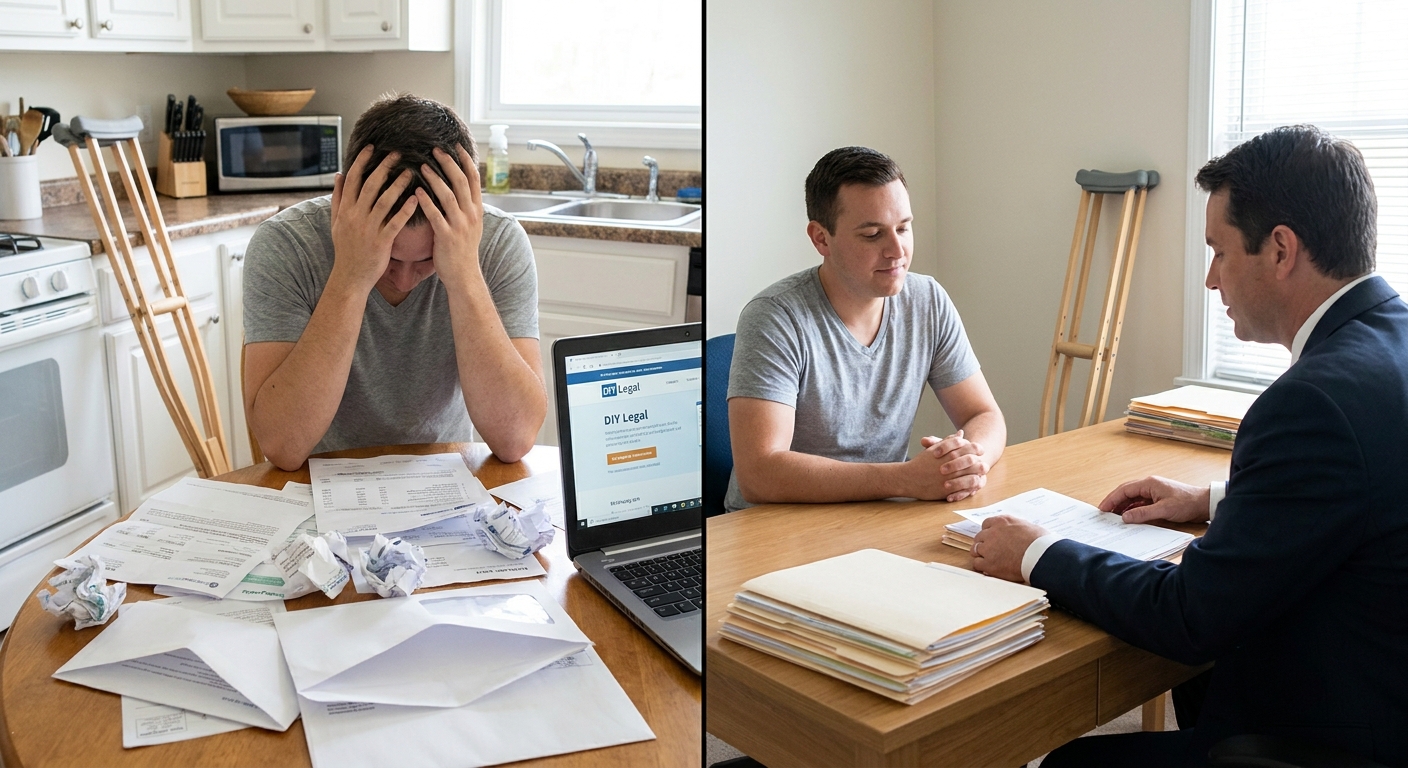
If you slipped on a wet floor at a store, tripped on a broken step, or fell on icy stairs, you may assume the property owner is automatically responsible. In reality, premises liability claims can be challenging. Insurance companies often argue that you were careless, the danger was obvious, or the owner “didn’t know” about the hazard.
Why Slip‑and‑Fall Cases Are Harder Than They Look
This guide explains how U.S. slip, trip, and fall injury claims typically work, what evidence matters, and how to avoid missteps that can weaken your case. It is informational only, not legal advice. For advice about your situation, consult a licensed attorney in your state.
The Legal Basics: Duty, Notice, and Reasonable Care
Slip‑and‑fall cases usually turn on three questions:
Did the property owner or occupier owe you a duty of care?
Did they unreasonably fail to keep the property safe?
Did that failure cause your injury and damages?
Your Status on the Property Matters
Depending on your state, your rights can vary based on why you were on the property:
- Invitee – Customers in stores, clients in offices. Owners generally owe invitees a high duty of care: to inspect the property, fix hazards, or warn about dangers.
- Licensee – Social guests, some visitors. Owners usually must warn of known dangers that aren’t obvious.
- Trespasser – Someone on property without permission. Duties are more limited, though there are important exceptions (for example, some protections for children).
Notice: Did the Owner Know (or Should They Have Known)?
You usually must show that:
- The owner or employees created the hazard, or
- They knew about the hazard and did nothing, or
- The hazard existed long enough that they should have discovered and fixed it with reasonable inspections.
Examples:
- A spill on a grocery floor has been there for 30 minutes with no cleanup.
- A broken stair has been reported to management but not repaired.
- Ice builds up on a walkway every winter and the owner does nothing to treat it.
Step‑by‑Step: What to Do After a Slip, Trip, or Fall
Step 1: Get Medical Attention
Your health comes first. Even if you are embarrassed, don’t brush it off.
- [ ] Call 911 if the injury seems serious.
- [ ] Accept on‑site first aid or emergency transport if needed.
- [ ] Visit a doctor, urgent care, or ER as soon as possible.
Explain exactly how you fell and what parts of your body were injured so it’s documented in your medical records.
Step 2: Report the Incident Immediately
If you are physically able:
- [ ] Notify the property owner, manager, or an employee right away.
- [ ] Ask for an incident report to be completed.
- [ ] Request a copy or at least the report number.
If you’re too hurt to do this at the time, try to:
- [ ] Have a friend or family member return to the scene to report it.
- [ ] Follow up in writing (email or letter) as soon as you can.
Step 3: Preserve Evidence at the Scene
Hazards can be quickly fixed or disappear (spills mopped, ice melted, objects moved). Whenever safe and possible:
- [ ] Take photos or video of:
- The exact spot where you fell
- The hazard (liquid, uneven floor, broken step, loose rug, poor lighting)
- Any warning signs or lack of signs
- The surrounding area (cameras, displays, entrances/exits)
- [ ] Get contact information from witnesses.
- [ ] Note the date, time, weather conditions, and lighting.
Keep the clothing and shoes you were wearing, unwashed, in case they become relevant evidence.
Key Evidence in Slip‑and‑Fall Claims
Strong premises liability cases are built on documentation.
Essential Records
- [ ] Medical records and bills
- [ ] Incident reports or emails to the property owner
- [ ] Photos/videos of the condition that caused your fall
- [ ] Witness names and statements (if available)
- [ ] Any prior complaints or reports (if you can obtain them)
Useful Supporting Evidence
- [ ] Maintenance logs or cleaning schedules (often obtained later in a lawsuit)
- [ ] Weather reports (for ice/snow cases)
- [ ] Surveillance footage (ask the property owner to preserve it in writing)
Because businesses often record over video footage quickly, consider having an attorney send a preservation letter as soon as possible.
Typical Timeline of a Slip‑and‑Fall Claim
Slip‑and‑fall cases often take longer to resolve than car accidents because liability is frequently disputed.
First Week–3 Months
- Medical treatment begins
- Incident reported and documented
- Photos and witnesses identified
3–12 Months
- Ongoing treatment and evaluation of long‑term impact
- Investigation into who is responsible (owner, tenant, maintenance company)
- Possible settlement discussions
If a Lawsuit Is Filed
- Discovery: requests for cleaning logs, prior incident reports, surveillance footage
- Depositions of you, employees, and property managers
- Mediation or settlement conferences
- Trial if no agreement is reached
Total duration can range from many months to several years, depending on complexity and court schedules.
Damages You May Be Able to Claim
If you prove the property owner’s negligence caused your fall, you may seek compensation for:
- Medical expenses (past and future)
- Rehabilitation and physical therapy
- Lost wages and reduced earning capacity
- Pain and suffering and loss of enjoyment of life
- Home modifications (for serious injuries requiring ramps, mobility aids, etc.)
Settlement amounts in slip‑and‑fall cases vary widely based on severity of injury, clarity of fault, and available insurance coverage.
Common Defenses—and How to Prepare for Them
Property owners and insurers often use similar arguments to reduce or deny claims.
“Open and obvious” hazard
They may argue the danger was clear and you should have avoided it.
Comparative negligence
In many states, your compensation can be reduced if you’re found partly at fault (for example, if you were distracted by your phone).
Lack of notice
They may say they had no reason to know about the hazard (for example, a spill that occurred seconds before you slipped).
Pre‑existing conditions
Insurers often claim your pain is from old injuries or conditions, not the fall.
Preparing counter‑evidence—through medical documentation, witness testimony, and maintenance records—is critical. An attorney can help identify which facts matter most under your state’s law.
Mistakes That Can Weaken a Slip‑and‑Fall Case
Avoid these common errors after a fall:
- Not reporting the incident at the time or soon after.
- Leaving without documenting the scene or identifying witnesses.
- Downplaying symptoms from embarrassment or shock.
- Throwing away shoes or clothing that could show substances or defects.
- Posting online about the fall in a way that can be misinterpreted.
- Waiting too long to talk to a lawyer, risking lost evidence and missed deadlines.
When to Call a Premises Liability Lawyer
Because slip‑and‑fall cases often involve complex liability questions, it’s usually worthwhile to at least speak with an attorney when:
- You suffered significant injuries (fractures, head injuries, surgery, long‑term pain).
- You needed extended time off work or cannot return to your prior job.
- The hazard involved repeated problems (chronic leaks, recurring ice, known defects).
- There is uncertainty about who owns or controls the property (landlord vs. tenant vs. management company).
- The property owner or insurer is blaming you or has denied responsibility.
Most personal injury lawyers handling premises cases work on a contingency fee basis.
How Contingency Fees Usually Work in Fall Cases
While arrangements can differ, common features include:
- No upfront attorney fee.
- The attorney receives an agreed percentage of any settlement or verdict.
- If there is no recovery, the attorney’s fee is typically zero, though you may owe specific case costs depending on your agreement.
Ask:
- What percentage is charged at different stages (pre‑suit vs. litigation vs. trial)?
- How will costs for investigators or experts be handled?
- How medical bills and liens will be paid from any recovery?
Get everything in writing and keep a copy of your fee agreement.
Practical Next Steps If You’ve Fallen on Someone Else’s Property
- Seek medical care immediately and follow treatment recommendations.
- Document the scene and report the incident in writing if possible.
- Preserve evidence, including photos, clothing, and any communications with the property owner.
- Collect and organize your records: medical bills, incident reports, wage information.
- Contact a licensed premises liability attorney in your state to review your facts, deadlines, and options.
This guide cannot replace personalized legal advice, and premises liability laws differ significantly by state. A qualified attorney can explain how those laws apply to your specific situation and help you decide the best way to move forward.