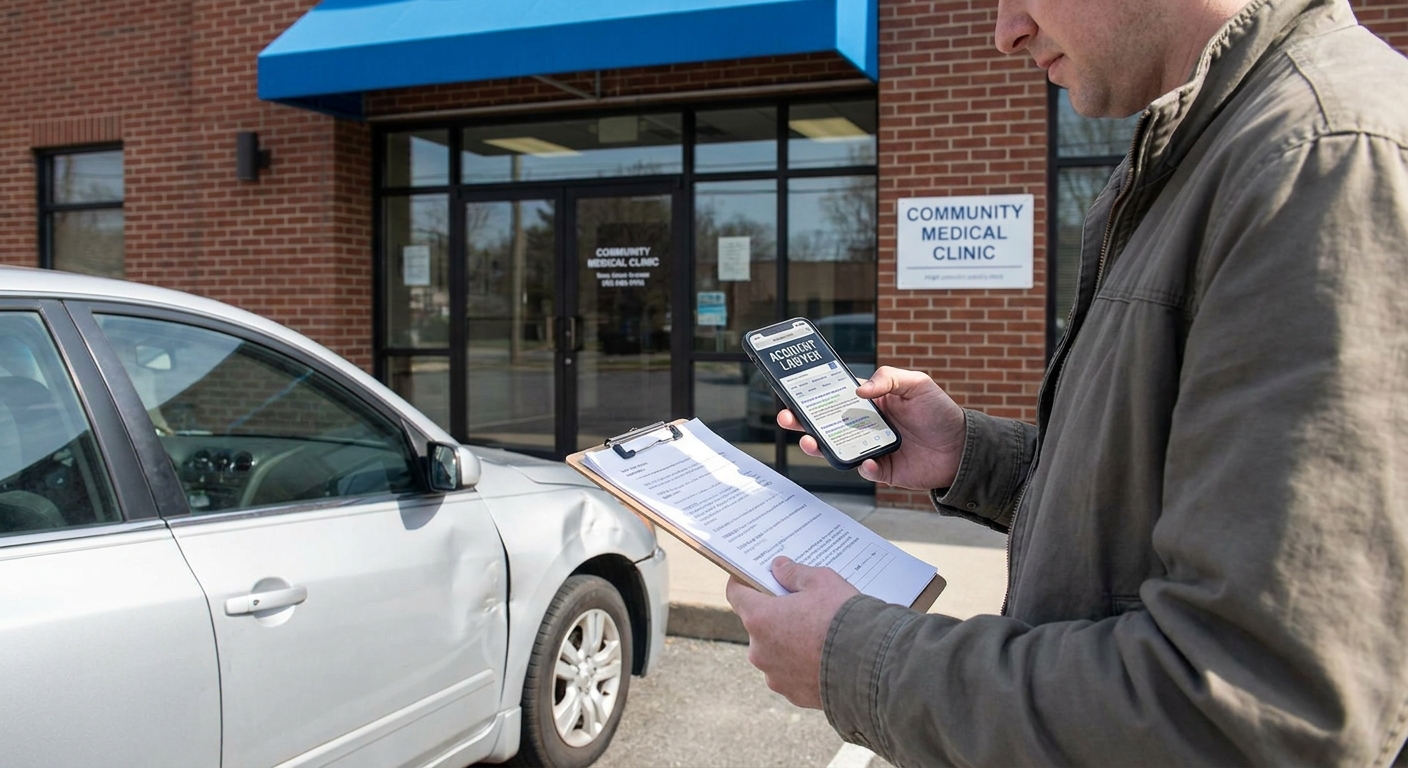
If you’ve just been in a car accident, you’re likely stressed, hurting, and unsure what to do next. This guide walks you step‑by‑step through the typical U.S. insurance claim process so you can protect your health, your rights, and your finances.
This article is general information, not legal advice. Laws and procedures vary by state. For advice about your situation, consult a licensed attorney in your state.
1. What To Do Immediately After a Car Accident
Your safety comes first, but what you do in the minutes and hours after a crash can strongly affect your claim.
1.1 Safety and 911
- Check for injuries. If anyone may be hurt, call 911.
- Move to safety if you can do so safely. Turn on hazard lights.
- Do not admit fault. You can be polite and cooperative without saying the collision was your fault or apologizing for causing it.
1.2 Call the Police
Even for what seems like a minor fender‑bender, a police report can make or break the insurance claim later.
Why the police report matters:
- Documents date, time, and location
- Records driver and witness statements
- Notes traffic violations, conditions, and diagram of the scene
If police do not come (common in minor collisions), ask how to file a self‑report or driver’s crash report in your state.
1.3 Gather Evidence at the Scene
If you’re physically able and it’s safe:
Take photos of:
- All vehicles (close‑ups and wide shots)
- License plates and VIN stickers (inside driver door)
- Road conditions, skid marks, debris, traffic signs
- Visible injuries (bruises, cuts, swelling)
- All drivers (names, phone, addresses)
- Insurance companies and policy numbers
- Witnesses (names, phone, email)
- Argue about fault at the scene
- Sign anything except a basic exchange of information form
Get contact info for:
Do not:
2. Getting Medical Care – Protecting Your Health and Your Claim
Many injuries aren’t obvious right away. Adrenaline can mask pain from whiplash, concussions, and soft‑tissue injuries.
2.1 Get Checked as Soon as Possible
- Visit the ER, urgent care, or your primary doctor promptly.
- Tell them you were in a car accident.
- Follow all treatment recommendations or discuss alternatives with your doctor.
Insurance adjusters often argue that a delay in treatment means you weren’t really hurt. Early documentation of your symptoms is crucial.
2.2 Keep a Symptom and Recovery Journal
Write down:
- Pain levels (0–10) and where you hurt
- Sleep problems or headaches
- Emotional impacts (anxiety, fear of driving)
- Missed work or activities
These details help link your injuries to the crash and support pain‑and‑suffering claims.
3. Understanding Which Insurance Covers What
Every state has its own rules, but most car accident claims involve these coverages:
3.1 Common Coverages
- Liability (BI/PD) – The at‑fault driver’s policy pays for your injuries and property damage up to policy limits.
- Collision – Your own policy pays to repair your car, regardless of fault, subject to a deductible.
- Uninsured/Underinsured Motorist (UM/UIM) – Your policy steps in if the at‑fault driver has no or too little insurance.
- Medical Payments (MedPay) or PIP – Helps pay medical bills regardless of fault (PIP is required in some "no‑fault" states).
3.2 Fault vs. No‑Fault States (High‑Level Overview)
- In fault states, you usually claim against the at‑fault driver’s insurer.
- In no‑fault states, you first use PIP coverage on your own policy for medical bills, regardless of fault. You can often still sue the at‑fault driver if your injuries meet certain thresholds.
Because rules vary widely, discuss your state’s system with an attorney if your injuries are more than minor.
4. The Car Accident Insurance Claim Process: Timeline and Steps
Every claim is different, but here’s how a typical bodily injury claim unfolds.
4.1 Step‑By‑Step Claim Roadmap
- Report the accident to your insurer (usually within days).
- Open a claim with the at‑fault driver’s insurer.
- Vehicle inspection and repair estimate. An adjuster or body shop inspects your car.
- Medical treatment and documentation. This phase may last weeks to months depending on injuries.
- Claim evaluation. Once you’re stable or finished treating, you or your attorney compile a demand package.
- Negotiation. Insurer responds with an offer; you negotiate or your attorney does.
- Settlement or lawsuit. Many cases settle before a lawsuit is filed; others settle after.
4.2 Typical Timeframes (Very General)
- Minor property‑damage only: Weeks to a few months
- Injury cases with short‑term treatment: Several months to a year
- Serious injury or contested liability: A year or more, especially if a lawsuit is filed
- How long you need treatment
- How clear fault is
- Insurance company workload and strategy
- Whether you hire an attorney and file suit
Your case may be faster or slower depending on:
5. Documents to Gather and Organize
Keeping paperwork organized reduces stress and strengthens your case.
5.1 Essential Claim File Checklist
Create a folder (physical or digital) with:
- Police report (or accident report number)
- Photos of vehicles, scene, and injuries
- Medical records (ER, urgent care, primary care, specialists)
- Medical bills and statements (including co‑pays and prescriptions)
- Health insurance EOBs (Explanation of Benefits)
- Work records (timesheets, wage statements, doctor notes excusing work)
- Repair estimates and final invoices
- Rental car receipts
- Towing and storage bills
- Any communication with insurance adjusters (letters, emails, notes from phone calls)
6. Common Mistakes That Weaken Car Accident Claims
Adjusters are trained to look for gaps and inconsistencies. Avoid these frequent problems:
6.1 Talking Too Freely to the Adjuster
- You must cooperate reasonably with your insurer, but you don’t have to give a recorded statement to the other driver’s insurer.
- If you do speak, stick to basic facts (who, where, when). Avoid speculating about speed, distances, or fault.
6.2 Gaps in Medical Treatment
- Skipping appointments, not following up with referrals, or stopping treatment prematurely can be used to argue you aren’t badly hurt.
- If you must miss or stop treatment (cost, childcare, transportation), tell your provider so it’s documented.
6.3 Social Media Posts
- Photos or posts about vacations, workouts, or activities can be taken out of context to argue you’re not injured.
- Consider staying off social media or keep accounts private and avoid discussing the accident or your injuries.
6.4 Accepting a Quick, Low Settlement
- Early offers may not reflect the full value of your injuries and lost time.
- Once you sign a release, you typically cannot go back for more money if your condition worsens.
7. What Your Car Accident Settlement May Cover
Every case is unique, but injury settlements usually include:
Economic damages (financial losses):
- Medical bills (past and, when supported, future)
- Lost wages and reduced earning capacity
- Out‑of‑pocket costs (medications, medical equipment, travel to doctors)
- Vehicle repairs or total loss
- Pain and suffering
- Emotional distress
- Loss of enjoyment of life
- Severity and duration of injuries
- Whether you fully recover
- Clarity of fault
- Insurance policy limits
Non‑economic damages (human impact):
Settlement ranges depend on factors like:
An attorney can help evaluate whether an offer is within a reasonable range for your situation.
8. When It Makes Sense to Hire a Car Accident Lawyer
You are generally allowed to handle your own insurance claim, especially if damage is minor and there are no injuries. But an attorney often helps in more complex situations.
8.1 Situations Where Legal Help Is Strongly Recommended
Consider speaking with a lawyer when:
- You have moderate or serious injuries (fractures, surgery, long‑term pain)
- You missed significant work or can’t return to your old job
- The insurance company disputes fault or blames you
- There are multiple vehicles or potential defendants
- The at‑fault driver has little or no insurance
- You’re being pressured to sign a release or accept a low offer
Most personal‑injury attorneys offer free initial consultations, and you are not required to hire the first lawyer you speak to.
8.2 How Contingency Fees Work
In many car accident cases, lawyers work on a contingency fee basis:
- No upfront attorney fee. The lawyer is paid a percentage of the recovery if there is a settlement or verdict.
- If there is no recovery, typically no attorney fee is owed (you may still be responsible for certain case expenses—ask about this).
- Common percentages vary and may change if a lawsuit or trial is required. The exact fee must be in a written agreement you review before signing.
- What percentage will you charge if the case settles before a lawsuit? After?
- Who pays case expenses (records, experts, filing fees), and when?
- How will you keep me updated?
Questions to ask during a consultation:
9. Final Thoughts: Protecting Yourself After a Crash
Being in a car accident is unsettling and often overwhelming. You can’t change what happened, but you can take steps to protect yourself:
Key Takeaways Checklist
- Get medical care and follow doctor instructions.
- Report the crash and obtain the police report.
- Gather and organize records and photos.
- Be careful with statements to insurers and on social media.
- Take time to evaluate any settlement offer.
- Consult a licensed attorney if you’re unsure about your rights.
Understanding the process won’t remove the stress, but it will help you make informed decisions and move toward a fair resolution of your claim.