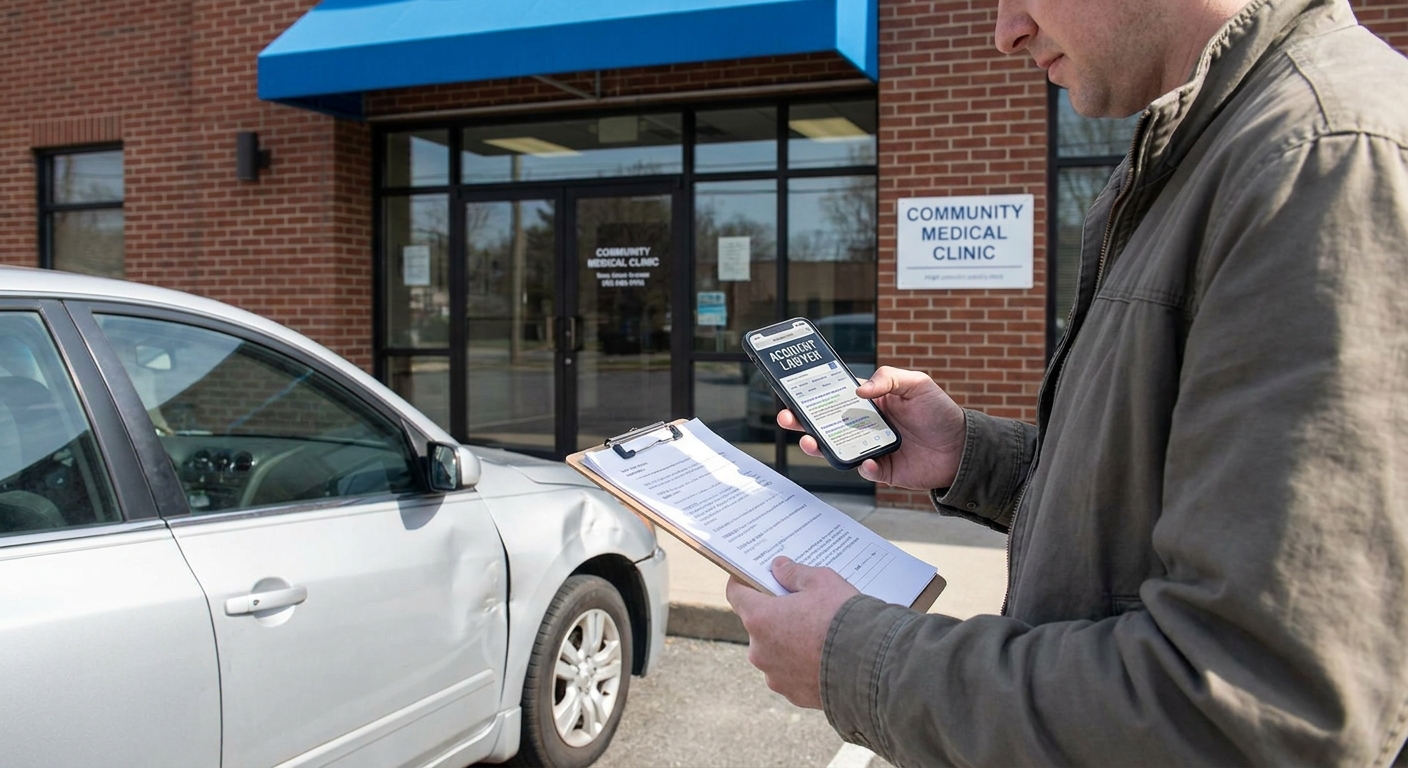
After a car accident, you may get two things quickly: an insurance claim number and a headache. Many people wonder, “Do I really need a lawyer, or can I do this myself?”
This guide walks through how car accident claims work in the United States and offers practical criteria for deciding whether to go it alone or get legal help.
This guide is information only, not legal advice. Every case and state is different. Consult a licensed attorney in your state for advice about your situation.
1. Two Very Different Claims: Property Damage vs. Injury
Most crashes involve at least two potential claims:
- Property damage – Damage to your car and belongings.
- Bodily injury – Harm to your body, mind, and ability to work.
You might handle one yourself and get a lawyer for the other.
1.1 When DIY Often Makes Sense: Property Damage Only
If you were not hurt, or only had very minor soreness that resolved quickly without medical care, your case may be mainly about fixing or replacing your vehicle.
Typical property damage issues:
- Getting your car repaired
- Determining if your car is a total loss
- Rental car or loss‑of‑use compensation
- Diminished value claims (in some states)
Many people handle these directly with the insurance adjuster. You can still consult a lawyer if you hit roadblocks, but it’s less common to hire one just for minor property damage.
1.2 When Injury Changes Everything
If you’re dealing with ongoing pain, medical treatment, or time off work, the stakes rise quickly:
- Medical bills can escalate.
- Some injuries have long‑term effects.
- Insurers often challenge injury claims more aggressively than car repair costs.
For injury claims, the question of DIY vs. lawyer becomes much more important.
2. How Insurance Companies View Your Claim
Understanding the adjuster’s perspective helps you decide if you need backup.
2.1 The Adjuster’s Job
Adjusters are trained to:
- Investigate fault
- Verify coverage
- Evaluate injuries and losses
- Set a reserve (what the company expects to pay)
- Settle claims for as little as reasonably possible
They may be courteous, but they work for the insurance company, not for you.
2.2 Common Adjuster Tactics You May Encounter
- Suggesting your injuries are pre‑existing
- Pointing to gaps in treatment or missed appointments
- Arguing you had a low‑impact collision, so you can’t be that hurt
- Asking for broad access to your medical history
- Pushing quick, low settlements before you know the full extent of your injuries
If these tactics feel overwhelming, that’s a sign you may benefit from legal representation.
3. A Practical Decision Framework: DIY or Lawyer?
Use this checklist to evaluate your situation.
3.1 Lean DIY If Most of These Are True
- [ ] Only property damage or very minor soreness that resolved quickly
- [ ] Little or no medical treatment (maybe one check‑up)
- [ ] No missed work—or only a day or two
- [ ] Clear fault and the other driver’s insurer is cooperative
- [ ] No prior injuries to the same body part
- [ ] You’re comfortable negotiating and handling paperwork
In these cases, hiring a lawyer may not significantly increase your net recovery after fees.
3.2 Strongly Consider a Lawyer If Any of These Are True
- [ ] ER visit, imaging (X‑ray/MRI/CT), or hospital stay
- [ ] Ongoing pain, limited mobility, or need for physical therapy
- [ ] Surgery or recommendation for surgery
- [ ] More than a few days of missed work or long‑term work restrictions
- [ ] Dispute about who was at fault
- [ ] Multiple vehicles or commercial vehicles involved
- [ ] The at‑fault driver is uninsured or underinsured
- [ ] You have a pre‑existing condition made worse by the crash
- [ ] You feel pressured, confused, or overwhelmed by adjusters
In these situations, an attorney can help protect your rights and potentially increase the value of your claim.
4. What a Car Accident Lawyer Actually Does
If you’ve never worked with a lawyer, it may be unclear what they add.
4.1 Behind‑the‑Scenes Work
A car accident lawyer typically:
- Investigates the crash and obtains police reports
- Collects and organizes medical records and bills
- Communicates with all relevant insurance companies
- Identifies all potential sources of coverage (liability, UM/UIM, PIP/MedPay)
- Evaluates liability and damages under your state’s laws
- Develops a settlement demand package with evidence and legal arguments
4.2 Negotiations and, If Needed, Lawsuit
If a fair settlement isn’t reached informally, the lawyer may:
- File a lawsuit within the statute of limitations
- Conduct discovery (depositions, document requests)
- Work with experts (medical, accident reconstruction, economics)
- Prepare your case for mediation, arbitration, or trial
You remain in control of key decisions, like whether to accept a settlement offer.
5. How Contingency Fees Work in Car Accident Cases
Most car accident attorneys use a contingency fee model. Understanding it helps you decide whether hiring counsel makes financial sense.
5.1 The Basics
- No hourly billing. You don’t pay by the hour.
- No upfront attorney fee. The lawyer’s fee is a percentage of the settlement or verdict.
- No fee if no recovery. If there is no settlement or verdict, you typically owe no attorney fee (though case expenses are handled differently—see below).
Percentages vary by state and by law firm and may increase if a lawsuit is filed or the case proceeds to trial.
5.2 Case Expenses vs. Attorney Fees
There are two separate buckets:
- Attorney fee – The percentage the lawyer earns.
- Case expenses – Money spent to build your case (e.g., record fees, court filing fees, expert witnesses).
Ask any attorney you consult:
- Will you advance case expenses?
- Will I owe expenses if there is no recovery?
- Are expenses deducted before or after your fee is calculated?
5.3 What About Net Recovery?
Your net recovery is what you receive after:
Payment to medical providers/health insurers (when required)
Attorney fees
Case expenses
For minor cases, sometimes the net recovery won’t significantly improve with a lawyer. For more serious cases, an attorney’s ability to increase the gross settlement may outweigh the fee.
6. Handling a Simple Claim Yourself: A Basic Roadmap
If you decide not to hire a lawyer for a relatively minor claim, follow a structured process.
6.1 Steps for DIY Claim Handling
- Gather evidence: police report, photos, repair estimates, medical bills.
- Finish medical treatment or reach a stable point.
Summarize your damages:
- Medical bills - Lost wages - Out‑of‑pocket costs - Pain and suffering (describe length and severity)
Write a demand letter to the at‑fault insurer:
- Brief summary of crash - Clear statement of injuries and treatment - Itemized list of financial losses - Reasoned explanation of pain and suffering
Negotiate:
- Expect a lower first offer - Respond with facts and documentation - Stay calm and professional 6. Review the release carefully before signing any settlement.
If negotiations stall or the insurer becomes unreasonable, you can still consult a lawyer—just keep an eye on filing deadlines (statutes of limitation) in your state.
7. Warning Signs Your DIY Claim Is in Trouble
Consider getting legal help quickly if:
- The insurer denies liability outright.
- They accuse you of contributory or comparative fault and threaten to reduce or deny payment.
- You receive legal papers (a summons or complaint).
- The adjuster stops returning calls or repeatedly delays.
- You are approaching your state’s statute of limitations.
Once the deadline passes, you can lose your right to file a lawsuit, regardless of how strong your claim might have been.
8. Final Thoughts: Choosing the Path That Fits Your Case
Not every car accident requires a lawyer, and not every claim should be handled alone. Focus on:
- The severity of your injuries
- The complexity of fault
- The attitude of the insurer
- Your comfort level with negotiation and paperwork
When in doubt, take advantage of free consultations with licensed personal‑injury attorneys in your state. You’ll be better equipped to decide whether to handle the claim yourself or bring in professional help, and you’ll walk into any negotiation with a clearer sense of your rights and options.